
Ramsey Town Commissioners and Manx Wildlife Trust trial new ways of making Mooragh Lake more bird-friendly
05 February 2026
Ramsey Town Commissioners and Manx Wildlife Trust trial new ways of making Mooragh Lake
more bird-friendly
Birds move in quickly as Mooragh Lake returns to tidal conditions in ongoing winter trial
Ramsey Town Commissioners, Manx Wildlife Trust (MWT) and Mooragh Lake Water Sports are
working together on a winter trial at Mooragh Lake to explore how seasonal water-level
management could benefit birds while continuing to support community use of the park.
Each winter the lake is drained for maintenance, during which seawater flows in and out through the
sluice gate. This year, MWT is studying what happens when the lake is allowed to follow the natural
ebb and flow of the tide for a longer period, creating shallow water and exposed muddy areas that
provide rich feeding habitat for birds.
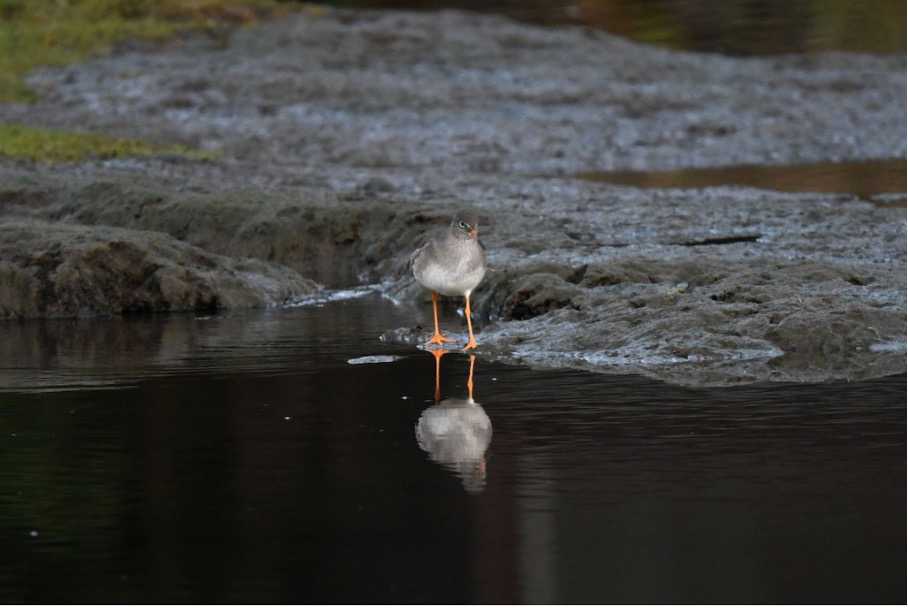
The lake was returned to its tidal condition in mid-January and birds began using the newly exposed
shallows almost immediately. MWT members have already recorded Oystercatcher (Red List),
Redshank (Red List), Ringed Plover (Schedule 1, Amber List), Little Egret (Schedule 1, Amber List),
Herring Gull (Red List) and Black-headed Gull (Red List) feeding in the lake.
David Bellamy, Head of Conservation and Land at Manx Wildlife Trust, said:
“What’s been most encouraging is just how quickly birds have responded. Within hours of the water
level being lowered, we were already seeing impressive numbers of waders and gulls feeding on the
newly exposed muddy areas. The highest single species count received so far is 130 Oystercatchers –
particularly impressive for this Red-listed species. This study really highlights how important these
muddy habitats are for birds in winter, and how small, well-timed changes can make a real difference
for wildlife while keeping Mooragh Park enjoyable for people. Several members have even told us
they were surprised by how much wildlife they can now see in the heart of Ramsey.”
Local action with wider significance
Shallow water and intertidal mud are among the most productive feeding habitats for waders and
other waterbirds. On the Isle of Man, these habitats are naturally limited and now largely restricted